A blank wall is a missed opportunity. A well-composed gallery wall, on the other hand, instantly gives a room personality, depth, and that collected-over-time feeling designers love. The best part? You do not need an art history degree or an unlimited budget to create one — just a little planning and the right pieces.
Whether you are working with a stairwell, a living room feature wall, or the space above your sofa, here is exactly how to build a gallery wall that looks like it was styled by a pro.
Start With a Cohesive Theme
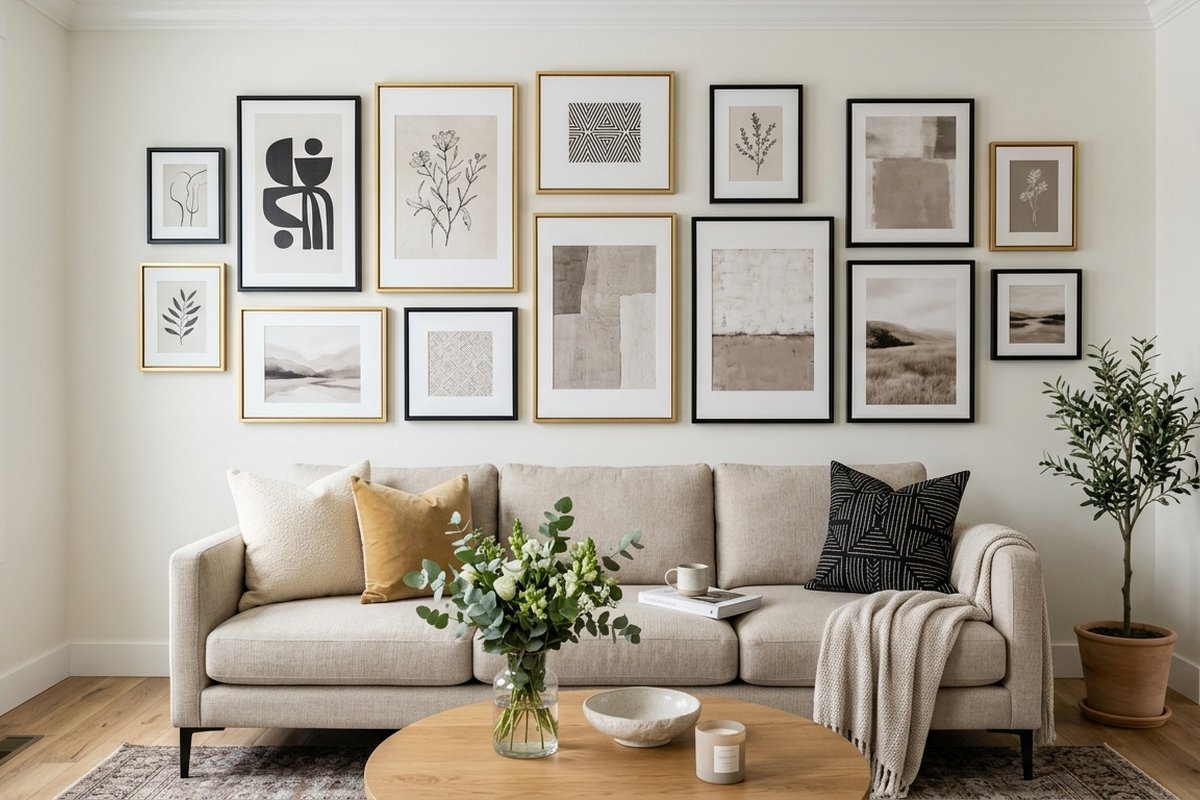
The secret to a gallery wall that feels intentional rather than chaotic is a unifying thread. That thread can be a color palette (all black-and-white, all warm neutrals), a subject (botanical prints, abstract shapes), or a frame style. You do not need everything to match — in fact, variety is what makes it interesting — but there should be something tying the pieces together.
A popular, foolproof approach is mixing abstract geometric prints with softer watercolor pieces in a shared color family. The contrast in style keeps it dynamic while the shared palette keeps it calm.
Plan Your Layout on the Floor First
Never start hammering nails without a plan. Lay all your framed pieces on the floor and arrange them until the composition feels balanced. A good rule is to place your largest or boldest piece slightly off-center as the anchor, then build outward with smaller pieces.
Aim for consistent spacing between frames — usually 2 to 3 inches — to keep the arrangement tight and gallery-like. Too much space and the wall feels disconnected; too little and it feels cramped.
Use Paper Templates to Test
Before you commit, trace each frame onto kraft paper or newspaper, cut out the shapes, and tape them to the wall with painter's tape. This lets you see the full composition at scale and adjust spacing without putting a single hole in your wall. Mark where the hanging hardware hits on each paper template so you know exactly where to place your nails.
Mix Sizes, Orientations, and Textures
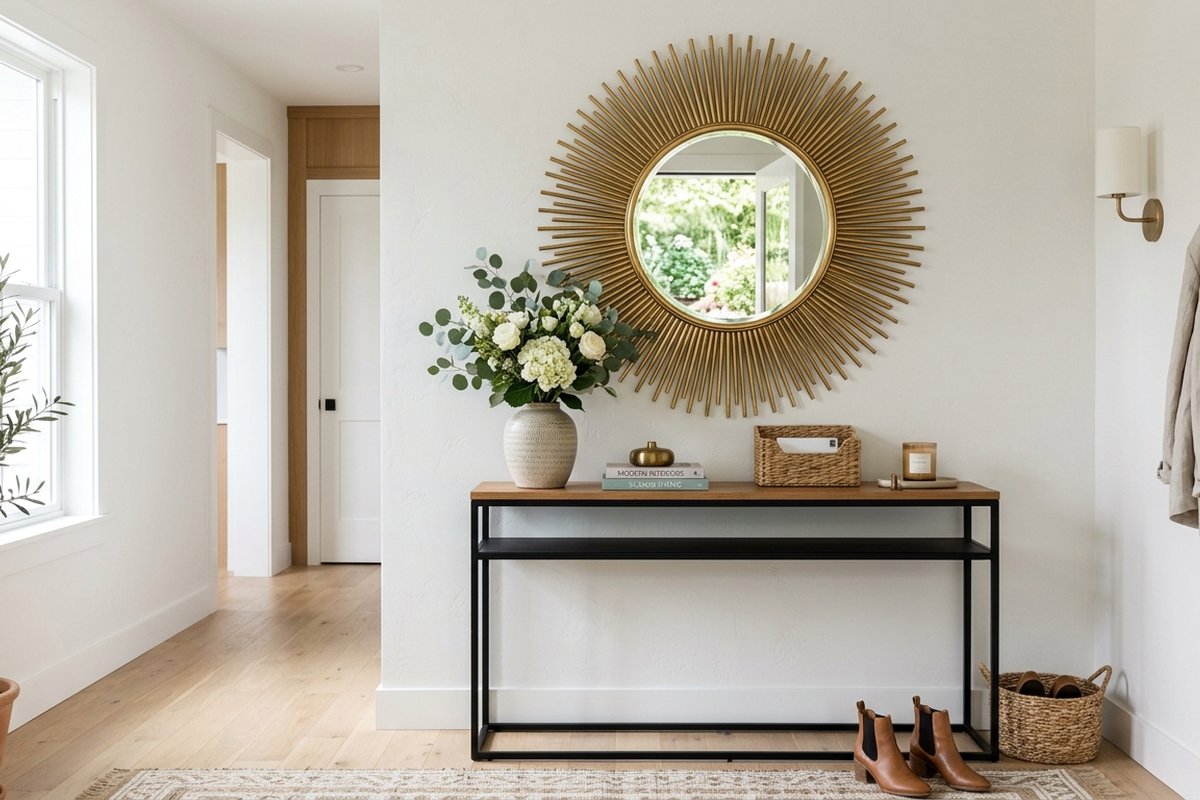
A gallery wall of identical frames in a perfect grid looks clean but can feel static. For a more collected, designer look, mix large and small pieces, portrait and landscape orientations, and different textures. Add a metal wall sculpture or a small mirror among the frames to break up the flatness and add dimension.
The variety draws the eye across the whole arrangement rather than letting it settle in one spot.
Hang at the Right Height
The most common mistake people make is hanging art too high. The center of your gallery wall arrangement should sit at roughly eye level — about 57 to 60 inches from the floor. When hanging above furniture like a sofa or console, the bottom of the lowest frame should be 8 to 10 inches above the furniture so the art relates to the piece below it rather than floating away from it.
Final Thoughts
A gallery wall is one of the highest-impact, lowest-cost ways to transform a room. Choose a unifying theme, plan your layout on the floor, test with paper templates, mix your sizes and textures, and hang at eye level. Follow those steps and you will end up with a wall that looks like it belongs in a design magazine.
Ready to start collecting? Browse our full range of canvas wall art and prints to find the pieces that will anchor your gallery wall.
Featured Pieces From This Guide
 Canvas Wall Art – Abstract Geometric Print, 24x36 in, Black & Gold
 Canvas Wall Art – Oversized Abstract Watercolor, 36x24 Inches, Blue
 Minimalist Metal Wall Sculpture – Abstract Geometric Design, 24 x 36 Inches, Black
Ready to shop? Explore the collections featured in this article: